
CAPE Phase 3 Opens Oct. 6: IEEPA Refunds on Final Entries for CIT Plaintiffs

A photorealistic editorial illustration of a U.S. Customs and Border Protection processing environment, rendered in a cool corporate blue and steel-gray palette. In the foreground, a large courthouse column and set of classical steps rise beside a modern digital control interface, symbolizing the intersection of litigation and automated customs processing. Overlaid on the scene, translucent holographic panels display abstract shipping manifests, stacked cargo containers, and a glowing calendar highlighting a date circled in red, suggesting an official regulatory deadline. In the background, a soft-focus shipping port with cranes and stacked containers fades into a hazy horizon, while streams of light representing data flow between the courthouse and a digital ledger of financial transactions. A gavel rests subtly beside a stylized customs seal, and faint binary-like light trails connect scattered padlock icons—some open, some closed—representing selective, restricted access to a bureaucratic refund system. The mood is precise, institutional, and quietly tense, reflecting complex trade law and regulatory gatekeeping. Use a realistic, high-detail editorial illustration style with dramatic directional lighting, sharp shadows, and a restrained, professional color palette of navy, slate, silver, and muted gold accents. No text, logos, or captions anywhere in the image.

U.S. Customs and Border Protection has informed the Court of International Trade that Phase 3 of its CAPE refund system will launch October 6, 2026, enabling reliquidation of finally liquidated entries subject to IEEPA duties. Unlike prior phases, Phase 3 is restricted to importers who are plaintiffs in IEEPA refund litigation and whose entries are…

Read More

CBP Proposes Requiring Importers to Maintain Records of Foreign Export Documentation

Editorial illustration of global trade and customs bureaucracy: a vast, dim warehouse-like customs office with towering shelves of paper files, shipping manifests, and stamped documents stretching into the distance. In the foreground, a large wooden desk holds overlapping international shipping documents—commercial invoices, bills of lading, certificates of origin—covered in official stamps, red wax seals, and customs markings in multiple languages, with a magnifying glass resting on top as if under scrutiny. Beyond the desk, blurred cargo shipping containers and a cargo ship are visible through tall windows, along with a world map on the wall with shipping routes traced in red string connecting ports across continents. Lighting is cool and institutional, with dramatic shafts of light emphasizing the towering stacks of paperwork, conveying themes of regulatory scrutiny, international trade documentation, and bureaucratic complexity. Style: photorealistic, high-detail editorial photography, muted navy and gray tones with subtle red accents, shallow depth of field, serious and analytical mood, no visible text or legible writing on any documents.

CBP’s September 2026 advance notice of proposed rulemaking may require importers to obtain, retain, and possibly submit foreign export declarations, invoices, and certificates their suppliers filed abroad, comparing them against U.S. entries to detect undervaluation or transshipment. This article examines the proposal’s practical challenges, legitimate reasons for discrepancies, and how importers should prepare comments before the December 1, 2026 deadline.

Read More

CBP Voiding Importer of Record Numbers on September 18
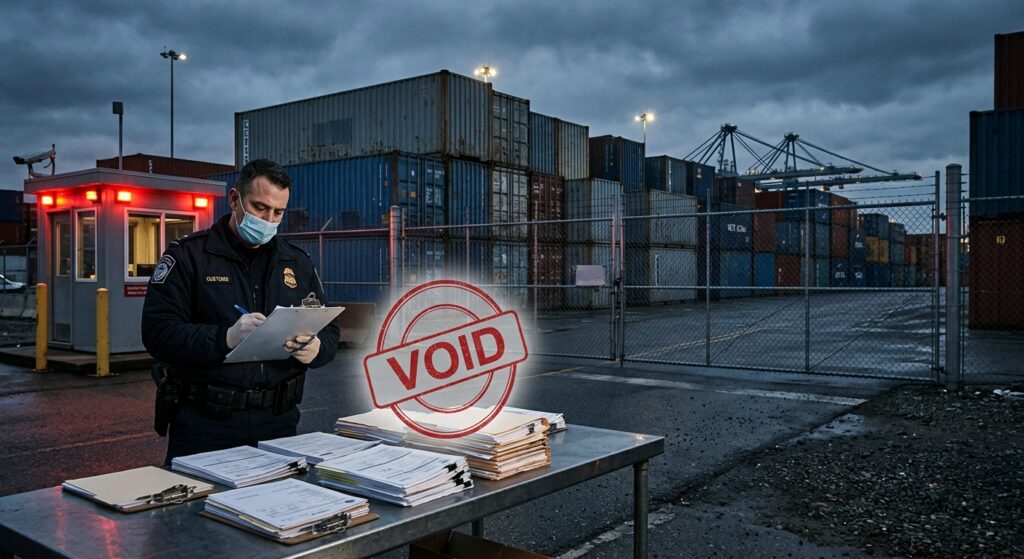
A tense customs warehouse at dusk, rows of stacked shipping containers halted before a border checkpoint gate, red warning lights glowing on an official inspection booth, a large digital stamp of a red "VOID" seal hovering translucently over stacked import paperwork and forms in the foreground, a uniformed customs officer reviewing documents on a clipboard near a chain-link fence, cranes frozen mid-motion in the background under an overcast sky, muted blue and gray industrial color palette conveying bureaucratic tension and urgency, photorealistic editorial illustration style, sharp shadows, cinematic lighting, no visible text or logos.

CBP will void importer of record numbers starting September 18, 2026, if Form 5106 data—physical address, email, or phone—doesn’t belong directly to the importer, immediately blocking imports. High-risk profiles include foreign IORs, DDP sales, and drop-shipping using third-party addresses. Importers should verify data and powers of attorney now to avoid stalled shipments.

Read More