
The Court of International Trade Certifies an IEEPA Refund Class: What the Freestyle World Ruling Means for Importers With Outstanding Refunds
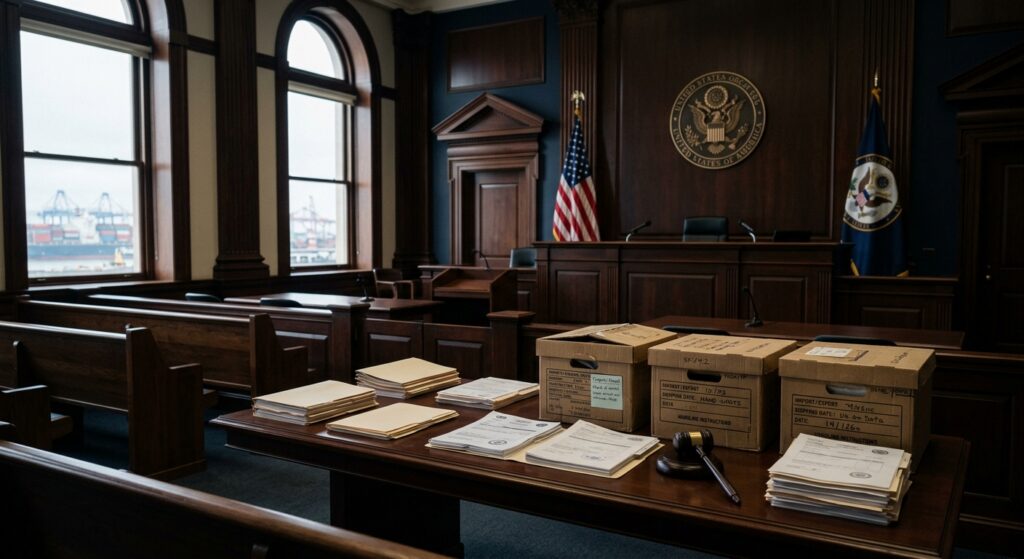
A photorealistic editorial image of a dim, formal federal courtroom interior shown from the back benches toward an empty judge's bench, warm wood paneling, tall American flag beside the bench, soft directional light streaming through tall windows onto neat stacks of shipping and customs paperwork, cardboard import boxes, and manila folders arranged on a long polished table in the foreground, a gavel resting beside the documents, subtle motif of international cargo ships or shipping containers faintly visible through a window in the background, muted navy, gold, and mahogany color palette, serious and institutional mood, shallow depth of field, high-detail professional photography style, no text or logos visible anywhere in the frame.

The Court of International Trade certified a nationwide class of importers who paid unlawful IEEPA tariffs, but no refund injunction has issued yet. This article explains the class definition, key exclusions like Brazil and India tariffs, interaction with CBP’s CAPE system, and whether importers should rely on the class or file individual claims before 2027 deadlines.

Read More

You Still Have Options: Recovering IEEPA Tariff Refunds After the CAPE and Protest Deadlines Have Passed

A wide-angle editorial photograph of a determined importer or business professional standing in a grand federal courthouse corridor, viewed from a low angle looking up, conveying strength and resolve. The figure is dressed in business attire, holding a thick folder of documents, with dramatic natural light streaming through tall arched windows casting long shadows across marble floors. The atmosphere is serious and institutional, with ornate neoclassical architecture visible โ€” columns, high ceilings, and stone walls suggesting the weight and permanence of the legal system. In the background, blurred courthouse doors suggest an open path forward. The overall mood is one of opportunity within a formal, authoritative setting โ€” hopeful but urgent. Cinematic lighting, editorial photography style, shallow depth of field.

The Supreme Court struck down IEEPA tariffs in February 2026, but many importers who missed the CAPE refund window or the 180-day protest deadline wrongly believe they have no recourse. A separate path through the U.S. Court of International Trade under 28 U.S.C. ยง 1581(i) remains open, offering a two-year statute of limitations โ€” but acting quickly is critical before entry-specific deadlines expire permanently.

Read More

IEEPA Refunds for Liquidated Entries: What Importers Must Do Now to Preserve IEEPA Refund Rights

A dramatic close-up of a large industrial clock with bold hands approaching a critical deadline, mounted on the wall of a formal federal courthouse interior featuring marble columns, American flags, and rows of wooden benches. In the foreground, stacks of international shipping documents, customs entry forms, and legal briefs are spread across a polished wooden table. A shipping container visible through a tall arched window in the background symbolizes international trade. The atmosphere is tense and urgent, with warm amber courtroom lighting casting long shadows across the documents. Editorial legal photography style, realistic and authoritative tone.

A July 15, 2026 U.S. Court of International Trade order establishes a refund framework for importers who paid International Emergency Economic Protection Act (IEEPA) tariffs on already-liquidated entries. The relief applies primarily to importers who have filed suit, as CBP maintains it cannot independently reliquidate finalized entries without a court order. Importers with liquidated entries…

Read More